Data Ich
Adèle & Emma Leseigneur-Leullier
DATA ICH
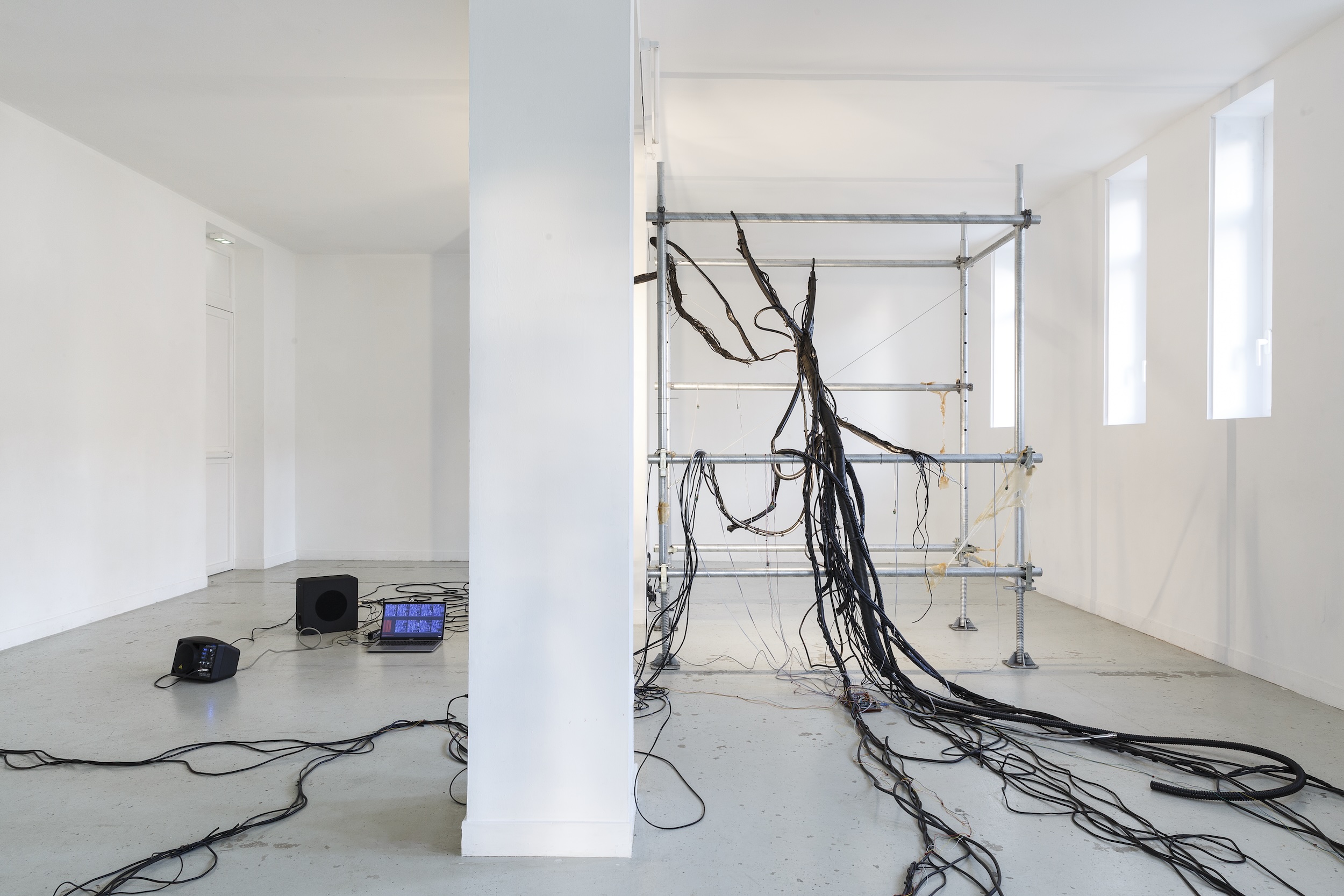
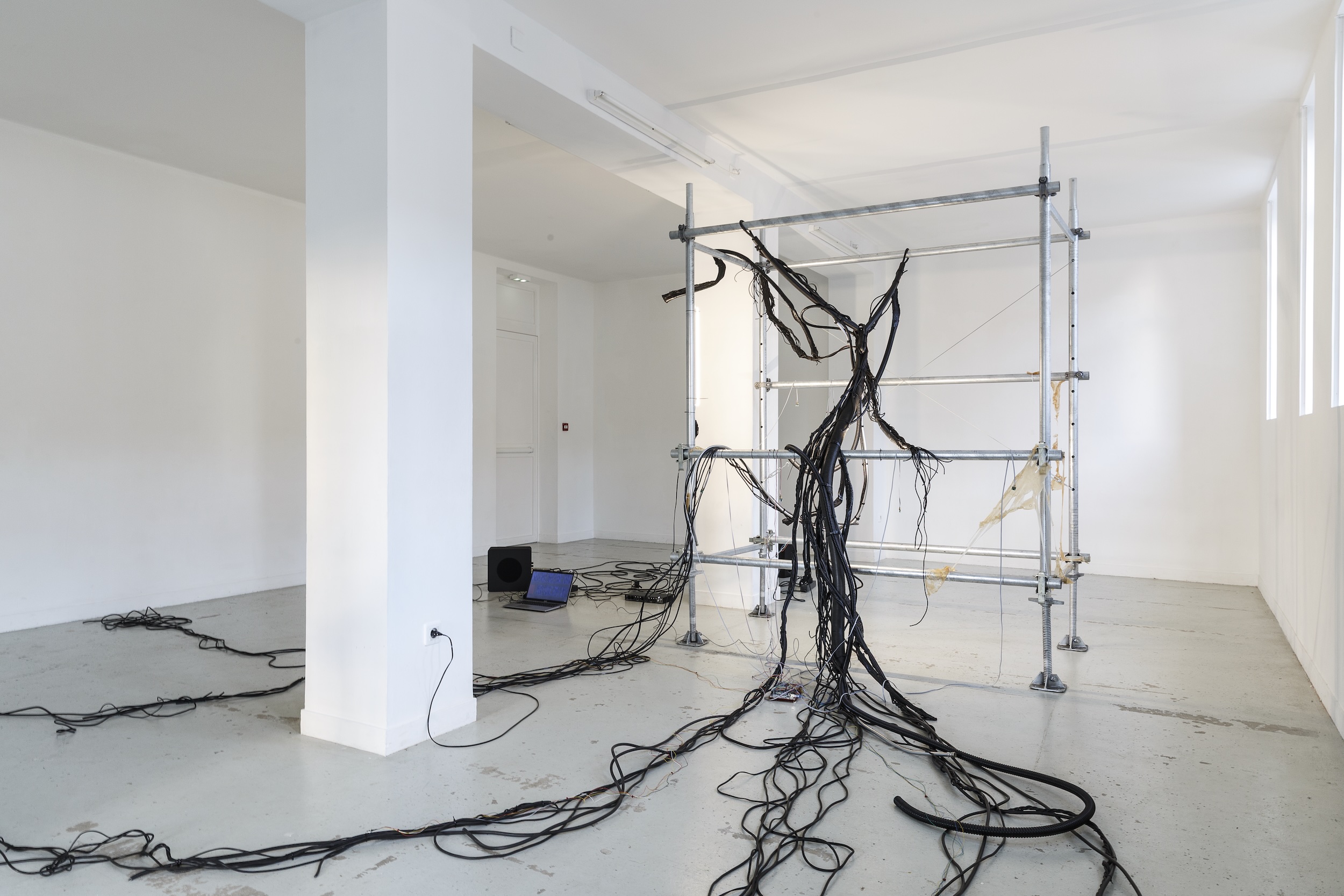
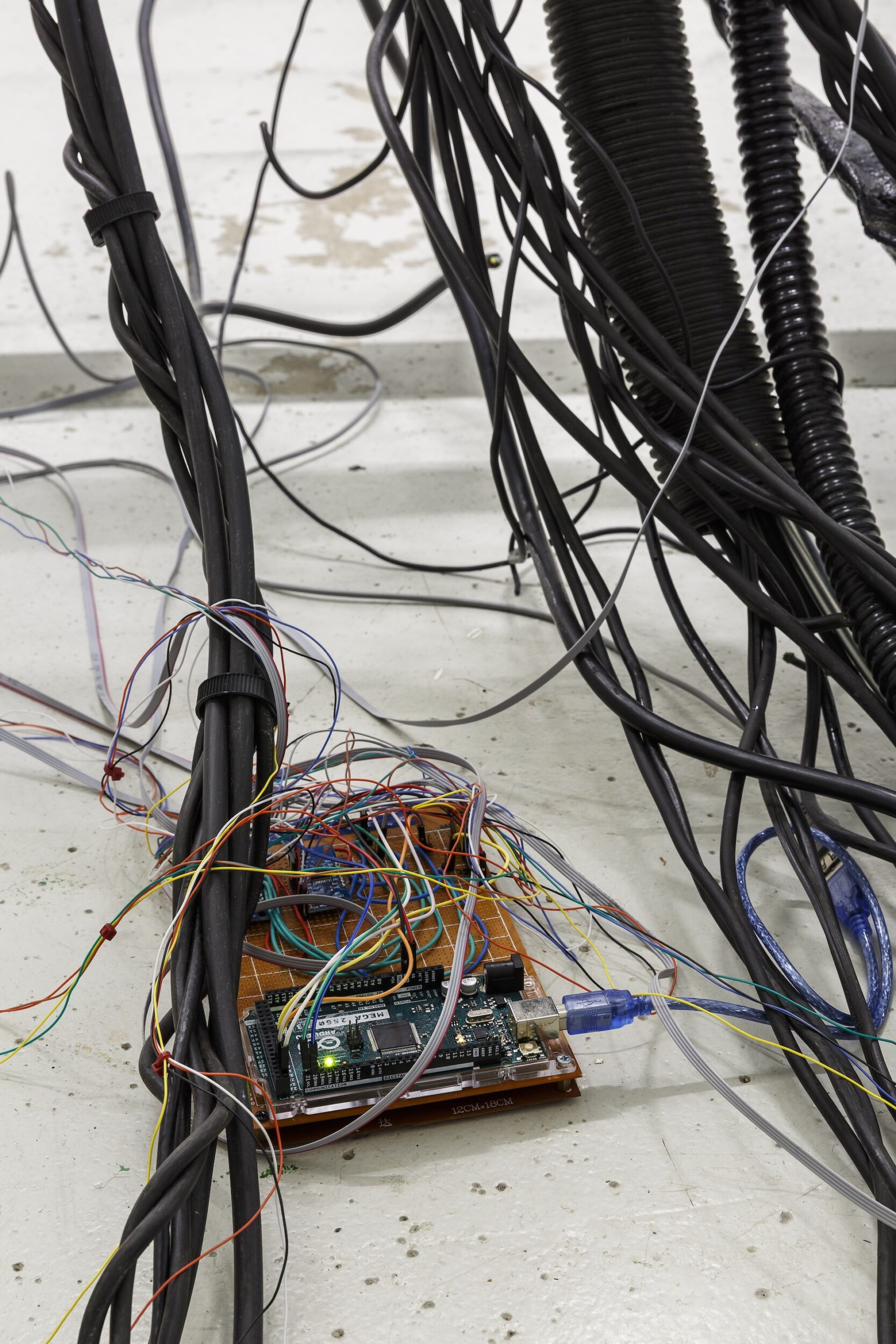
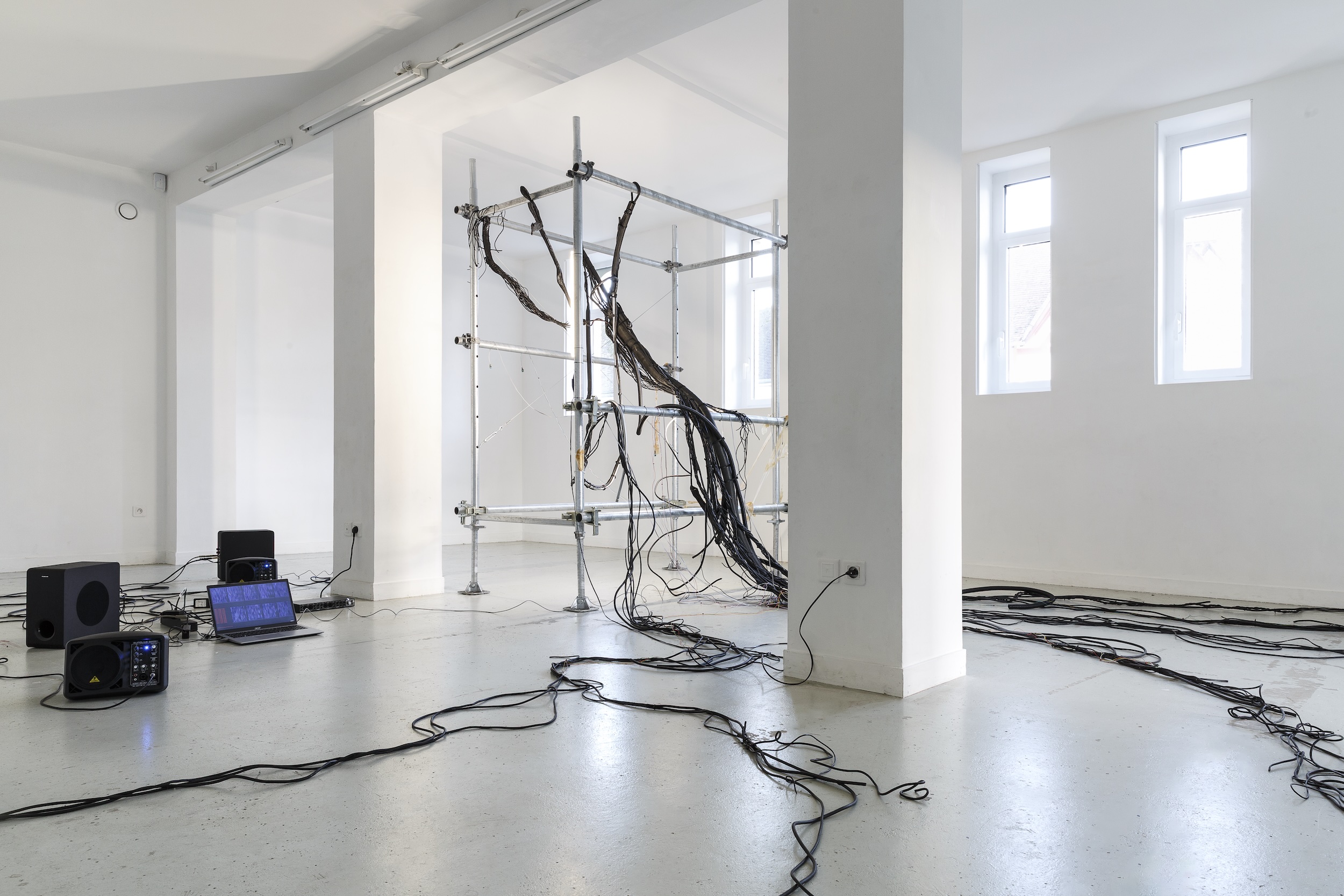
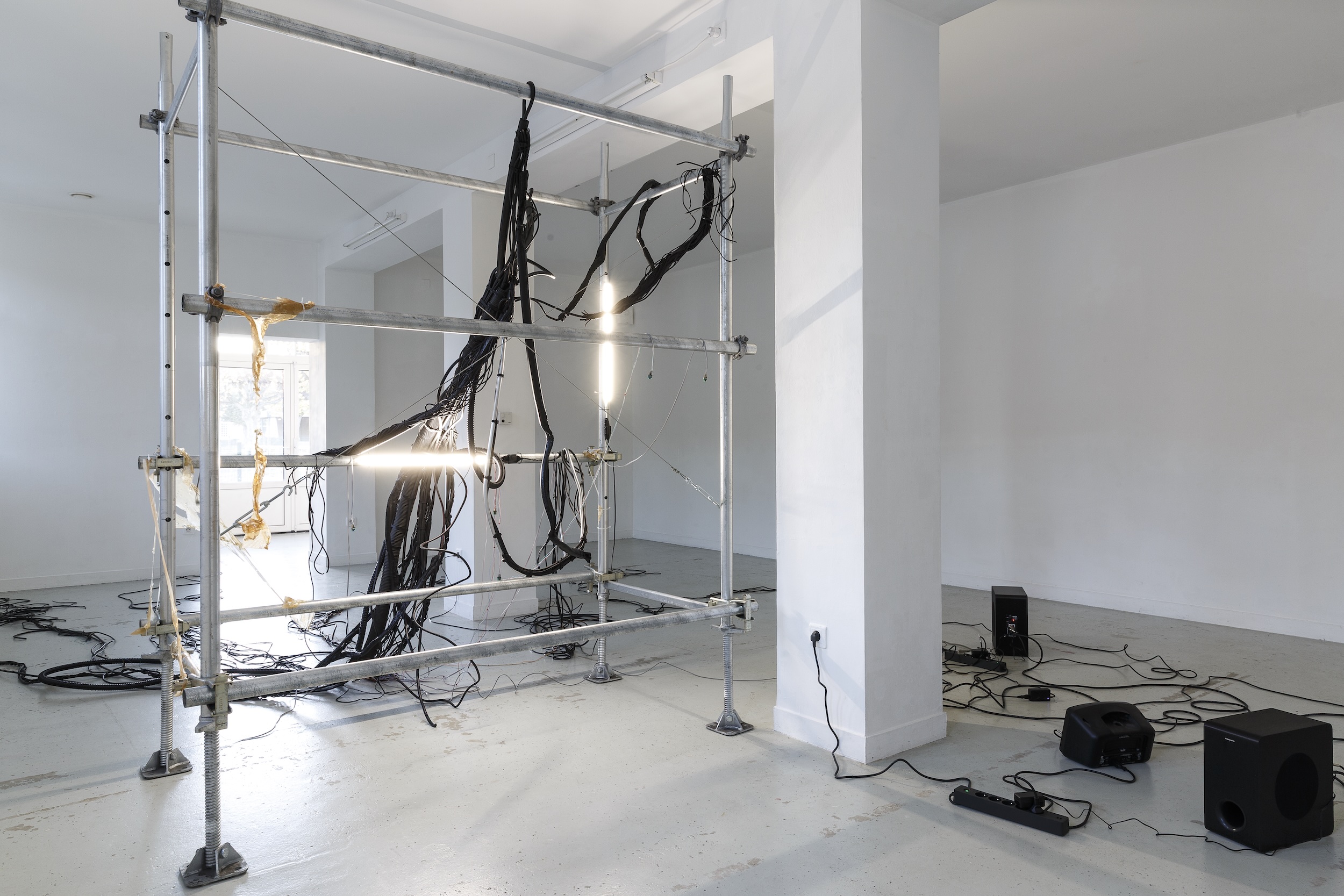
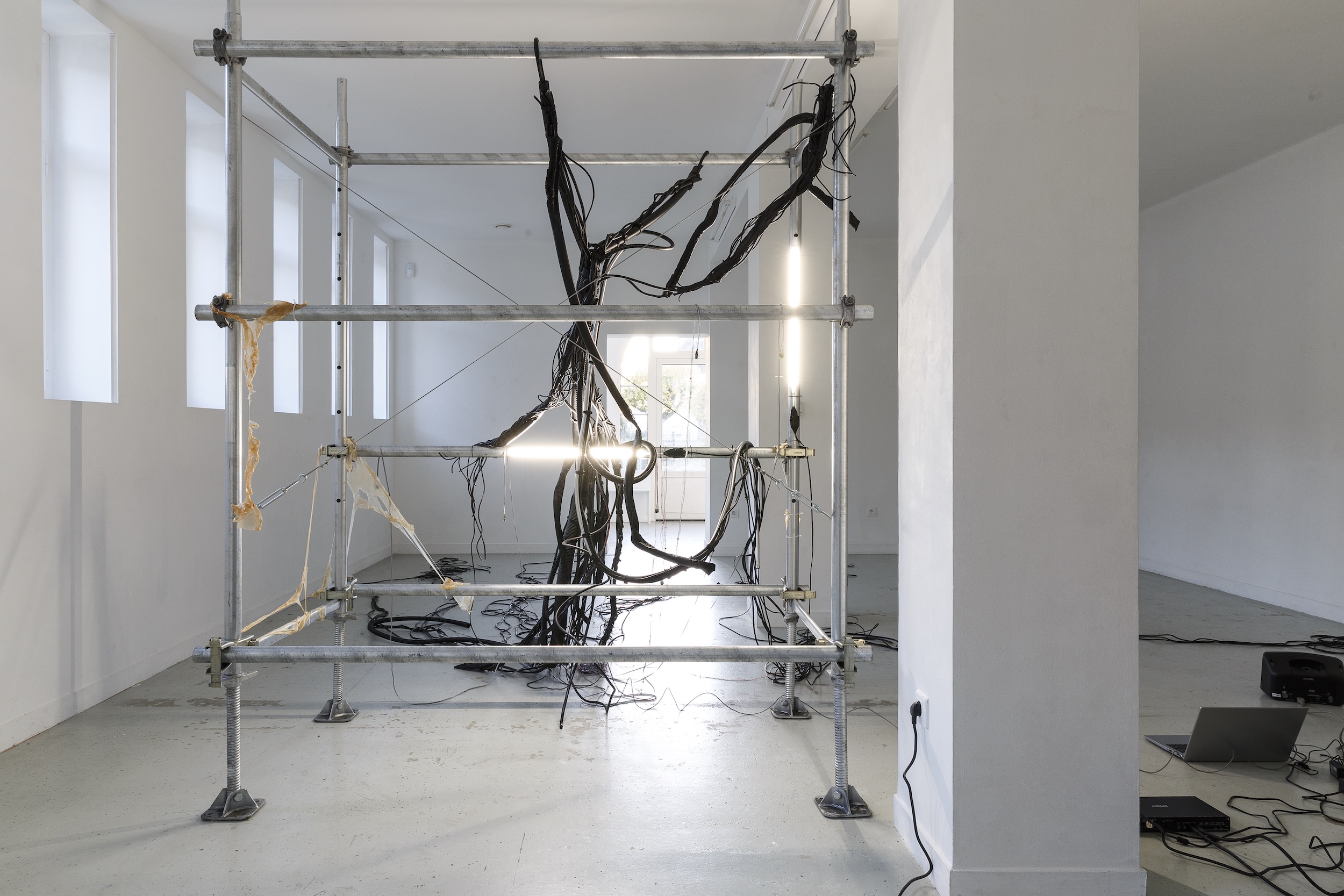
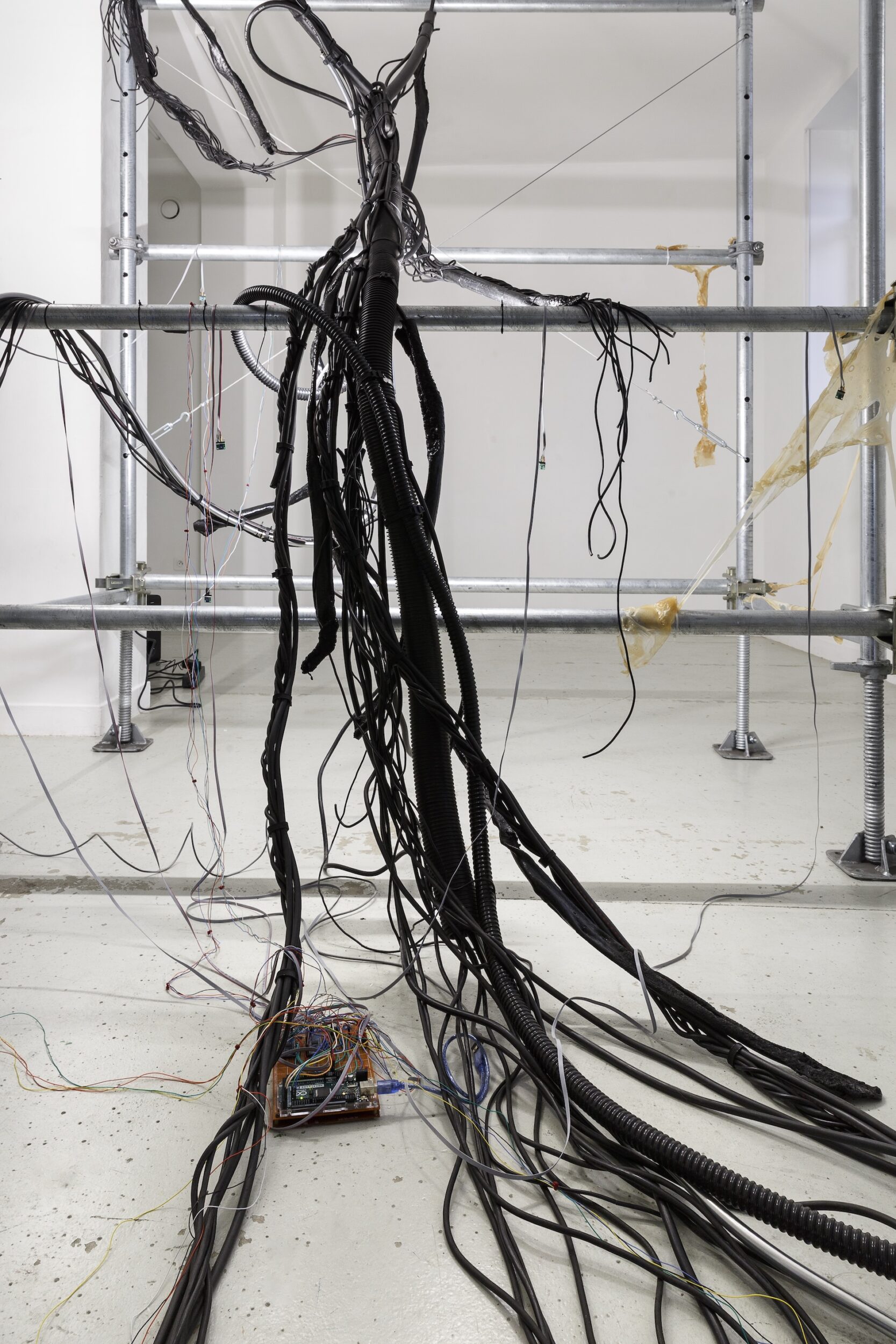
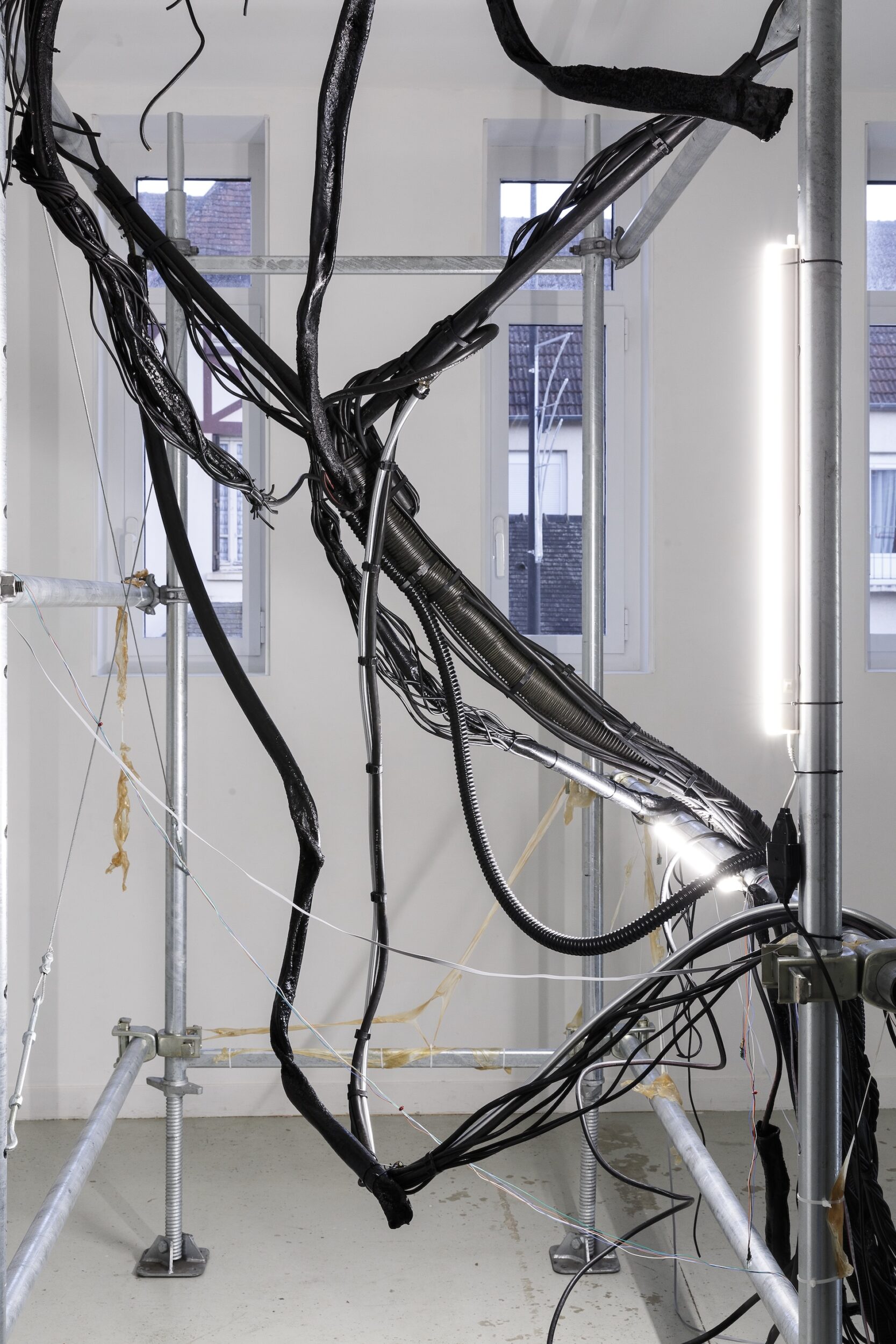
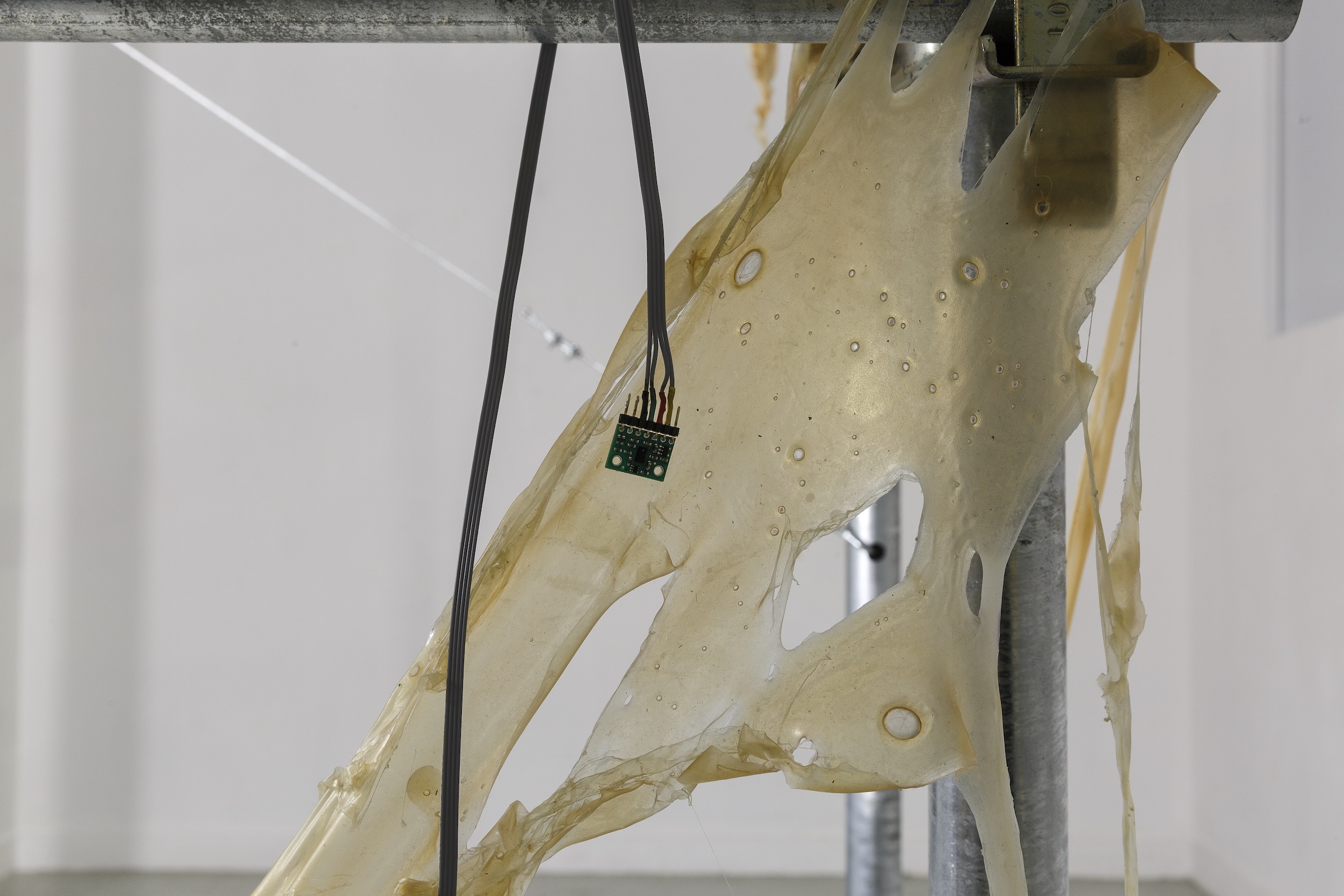
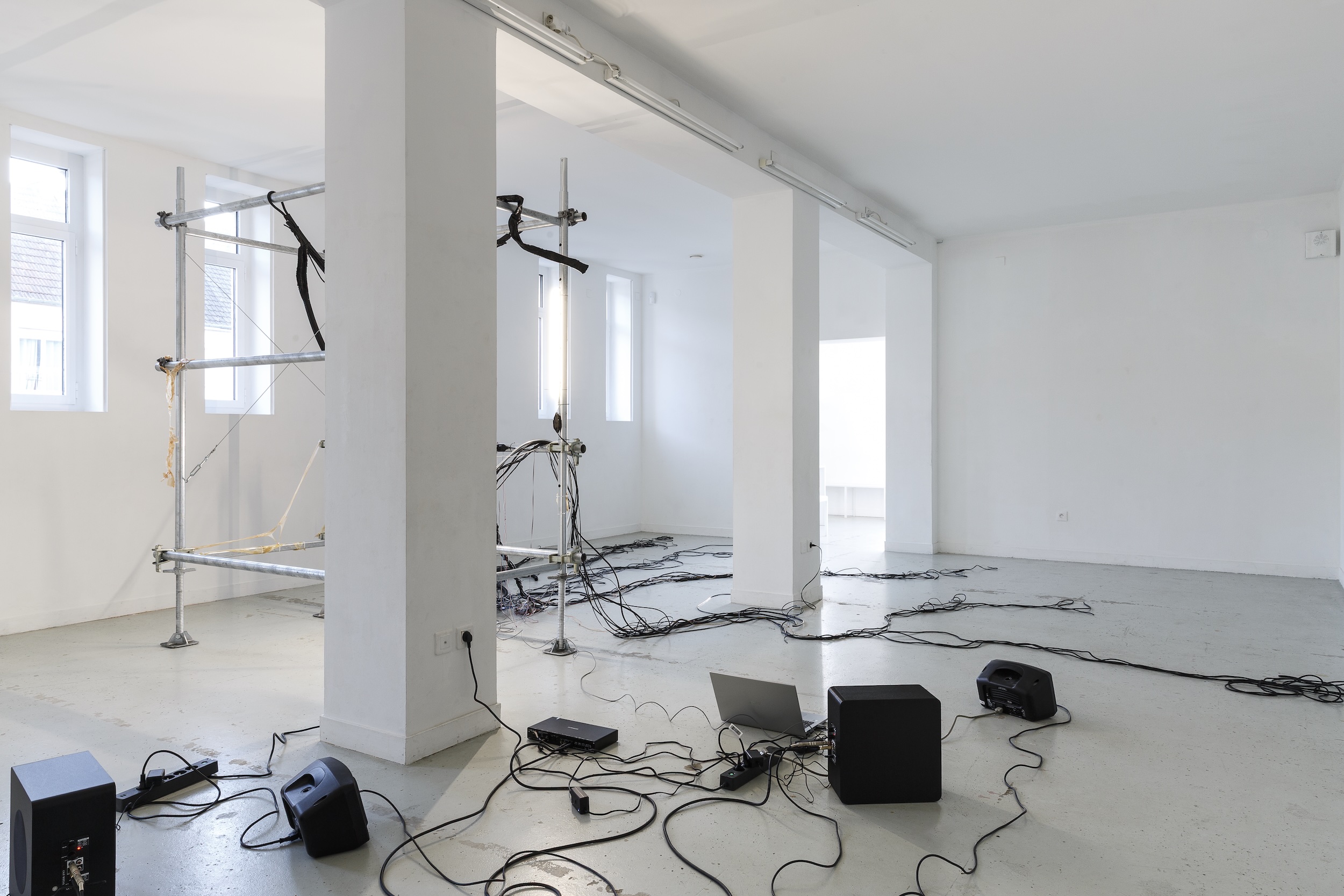
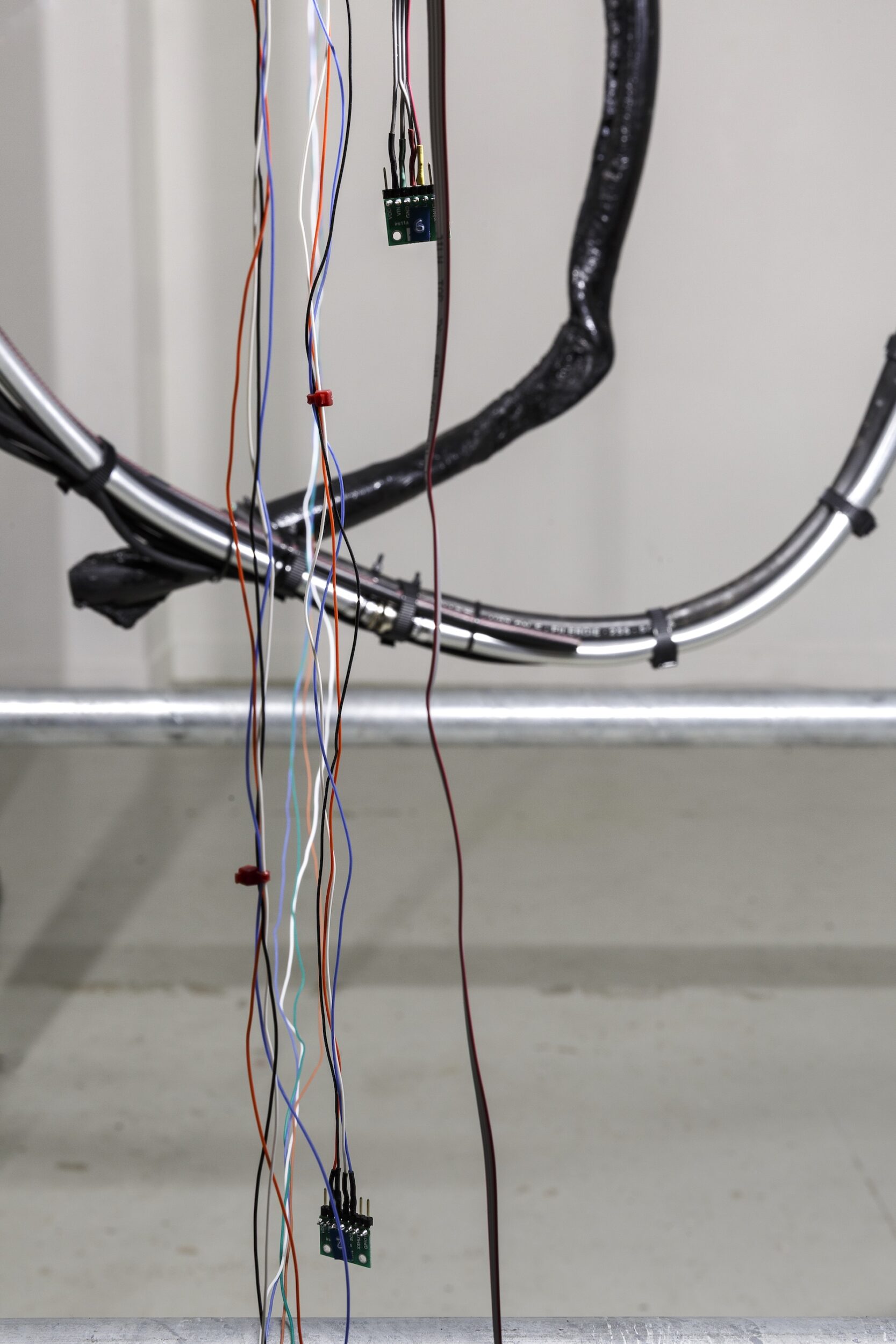
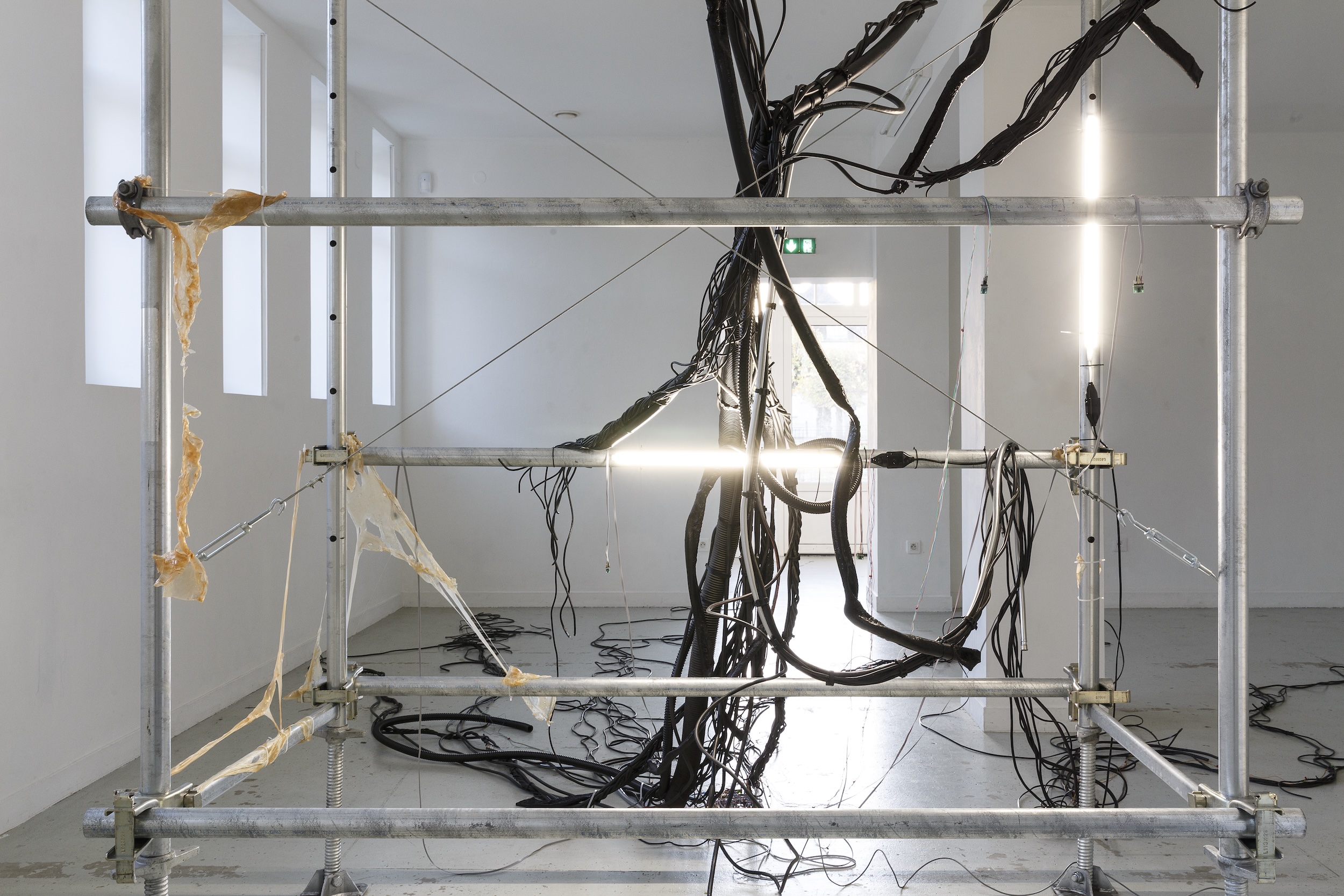
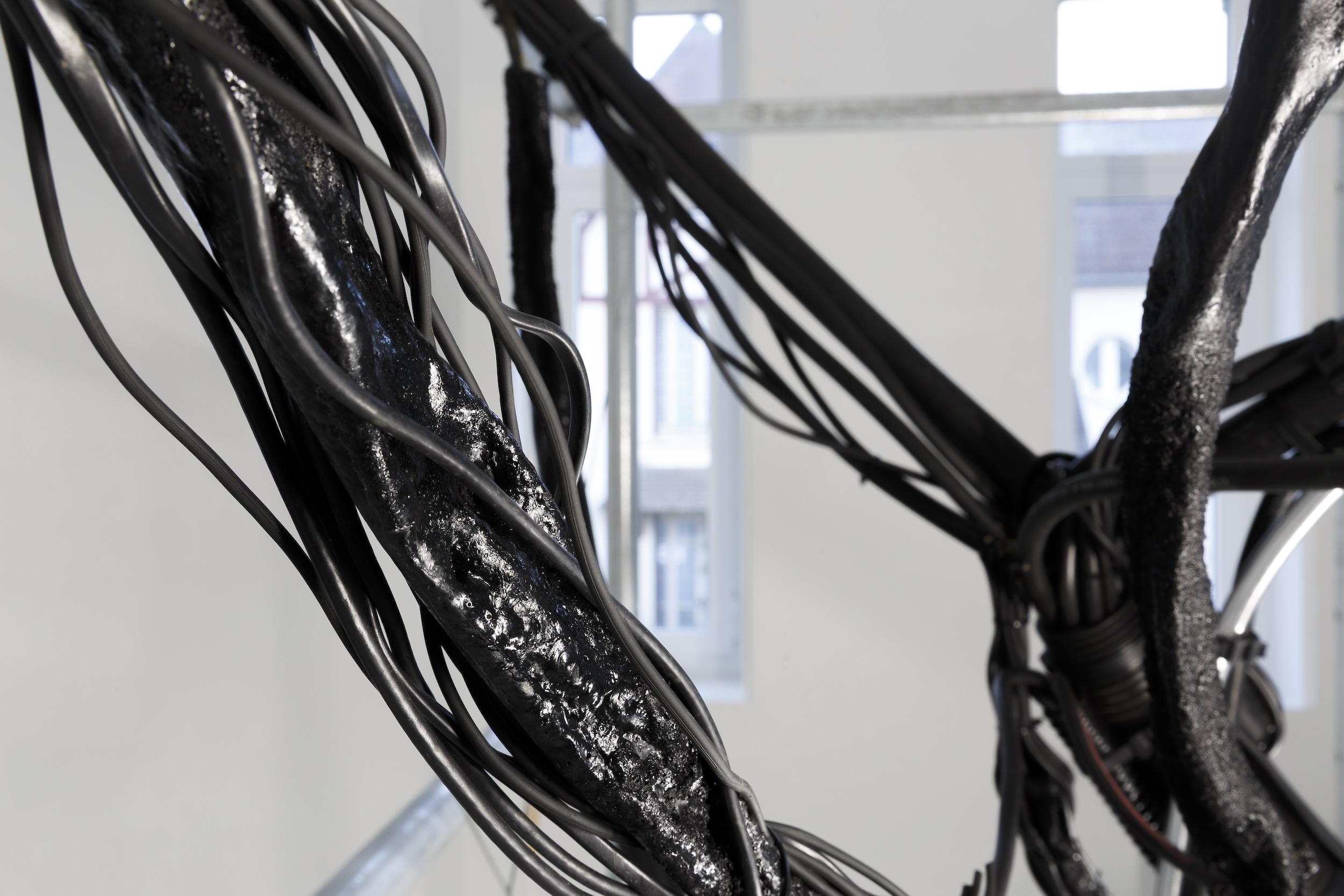
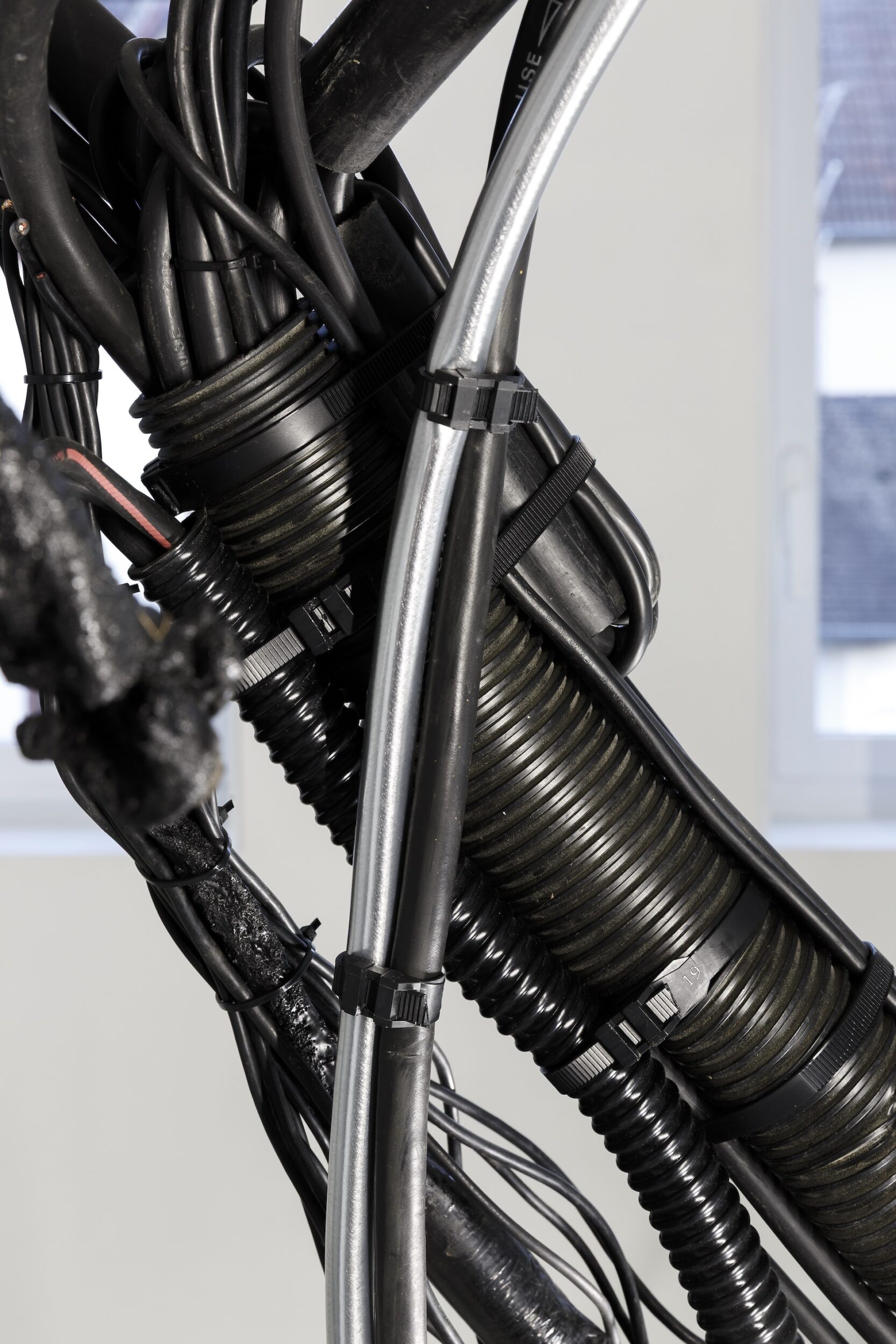
In Adèle and Emma Leseigneur-Leullier’s work, sculpture is never an object. It is a strained organism — a device that breathes, seeps, and is kept at the threshold of the living. Hanging from its own frame, an organ undergoing maintenance struggles to breathe. Its cables fold back on themselves, constrict, thread into one another with an almost elegant determination. On the surface, a latex skin, jagged and punctured, stretches and relaxes under some inner pressure. Moiré traces and dark reflections can be seen, as if the material were exuding oil. Behind this membrane, the vascular circuit pulses with the regularity of a computer system in slow failure. The whole thing seems to hold together thanks to tension, fatigue, and an instinct for endurance more than to a desire for structure. The veiny network forms an architecture of the intimate, the reconstruction of a collective body in a world that no longer remembers having been alive.
Clandestine testing zone
This ambiguous materiality issues from the thinking of Adèle and Emma Leseigneur-Leullier, for whom sculpture is above all a clandestine testing zone. Their art making is critical engineering, a system of thought switched on, where each technical decision extends a hypothesis of survival. They don’t illustrate a theory, rather they construct its scaffolding in the literal sense of the term, in the friction between analysis and making. The exoskeleton is no given. It is built incrementally, like a dual structure for both attention and what is electric. What they assemble is a mobile cognitive architecture – operational thinking applied directly to the artwork being elaborated. Each connection, each stitch, each instance of excessive rigor acts like a test. It essays the resistance of taking care and the fragility of control. Their art falls then within a philosophy of pharmakon, that is, techne as both care and dependency, repair as a wound deferred. In this, chaos becomes a principle of engendering; the machine, a recollection of the hand; and fatigue, a method.
Scaffolding / Infection
The steel scaffolding stands as either womb or prison — it’s no longer clear which. A rational cage from which the material spills like an infection. It’s an old recognizable architectural reflex, i.e., contain what’s living, prevent it from spreading. But this time, the city has come out the loser. The network ejects structure as if the organism refused to be treated, preferring to ooze out of its own stitches. Each cable is an electric muscle; each junction, a scar; each soldered point and weld, a compromise between treatment and cruelty. What should build crumbles; what should support becomes a medium. It is a gentle insurrection — oiled, sloganless. The stuff within runs counter to the geometry holding it back.
Sonic motherhood
“It goes on without us.”
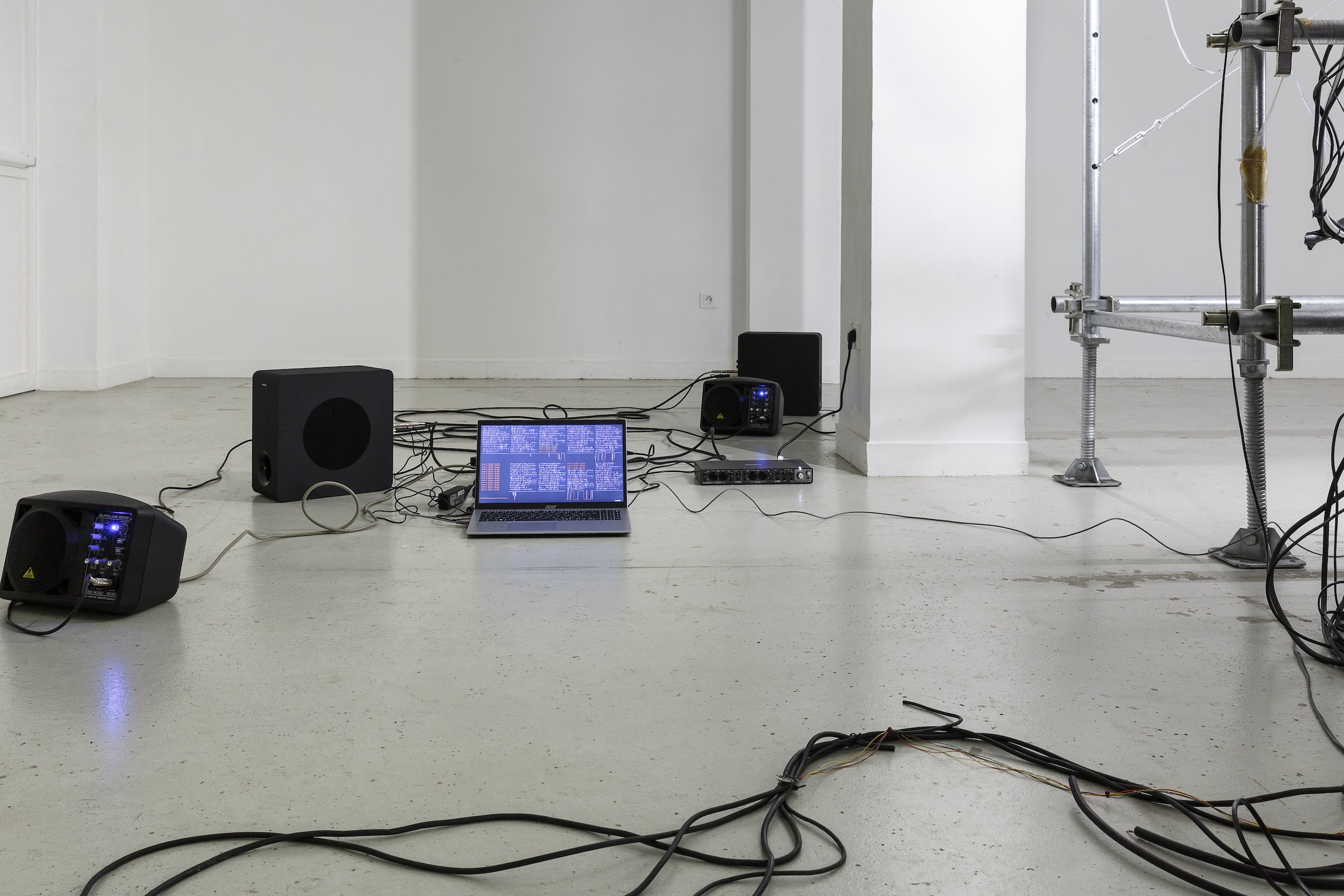
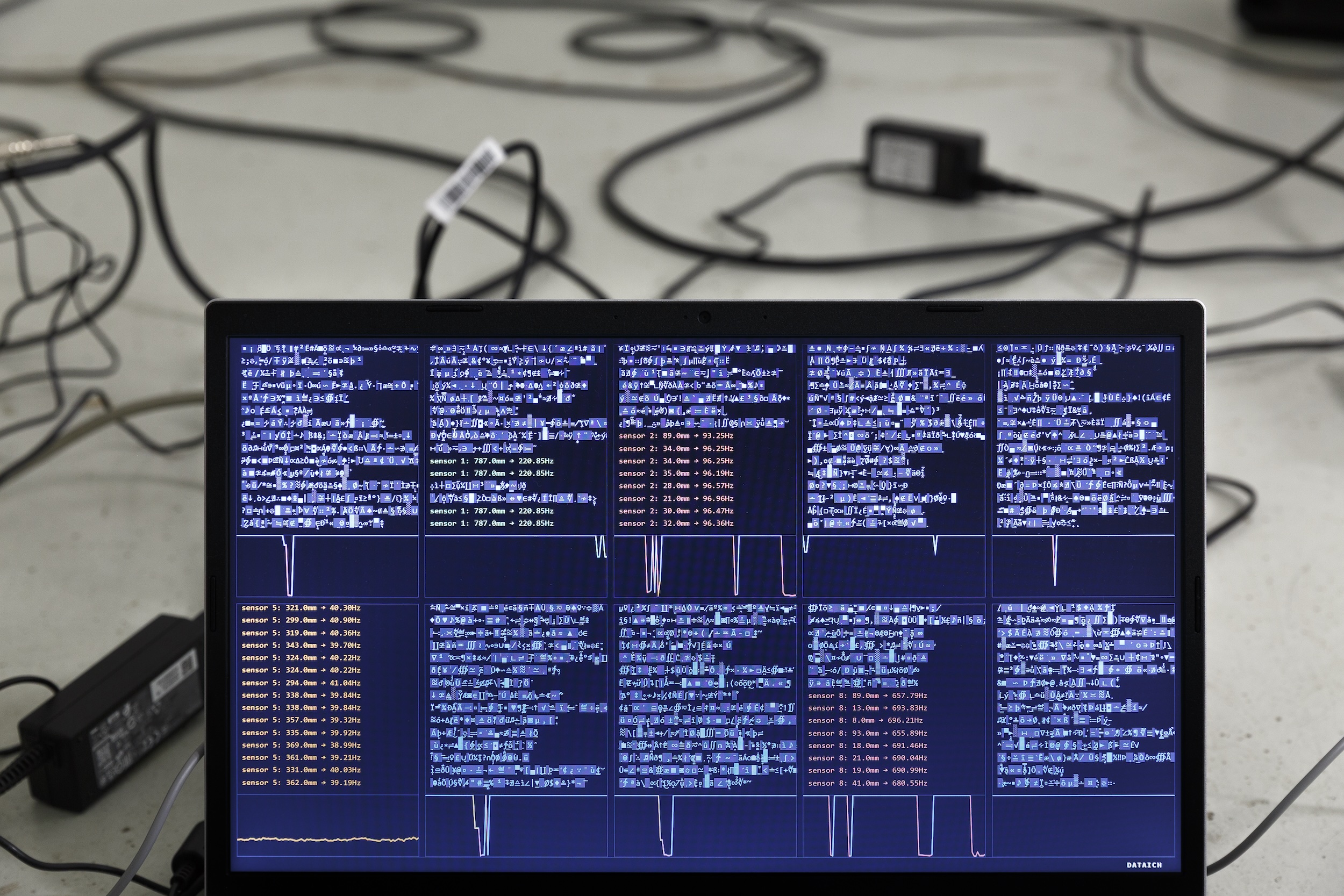
Under the cracked surface sound circulates. Not a piece of music, no, a flow of data and noise, a suite of more or less organic pitches, digesting human presence. Your breath, your voices, the rustle of your clothes, all is swallowed, treated, and spat back out in an algorithmic respiration. A muted soughing, a low hum, a continuous rumble, its sole activity is acoustic. The system is listening — a word that, here, turns threatening. Sound is not atmosphere but an inverted attention mechanism, that is, the machine remembers you. It retains your steps, your hesitations, and reformats them as murmurs and metallic panting. Each scrap of noise becomes a datum, each breath a piece of information. The sculpture breathes the world in and out through others’ throats. It’s a sonic motherhood, fed by human breathing, although already autonomous. Neither music nor language, it is a synthetic respiration, memory of an exhausted though still living world.
Pharmakon
“We work with tension. If you pull too hard, it collapses.”
The Leseigneur-Leulliers’ practice is based on a ritual of care that verges on metaphorical. Things are plugged in, unplugged, fed, repaired. Their relationship to matter is something like an industrial mothering. Their studio is a nursery of drip-fed devices, a clinic for connection. They talk about their pieces like “beasts of care,” which seems right – but the machines are beasts that suck in their sustenance, feed upon themselves, turn against their creators with cannibalistic tenderness. “It’ll go on without us,” they say half-flattered. In this ambivalence, a pharmacology of care unfolds: repair becomes dependency, the machine consoles and vampirizes at once.
Theoretical exoskeleton
Their conceptual structure — itself shaped by the pharmakon — operates in parallel, like another layer of the sculpture. A system of understanding, precise and incisive, accompanies each fold and each fastener. It doesn’t enclose — it infiltrates. It is a theoretical exoskeleton, a mental double of the physical installation, in which conceptual rigor combines with the viscosity of the gesture. Thought in this case doesn’t interpret, it acts like a lubricant, an eroding agent, a principle of critical instability. Its intelligence is latent, not displayed – an underground logic that is poised on the border of paranoia without ever succumbing. An organism that is aware of its own analysis but unable to stabilize it. In this hybrid body, theory does not follow form, it pollutes it from within. Their rigor is physical – a protocol in which analysis becomes gesture, and understanding passes through the fingers.
Ear
“You never know if it’s a caress or an aggression.”
Care becomes incision, repair deferred amputation. Techne, in this sense, is no longer the prolongation of the body but its testing. It acts as a sadistic mirror, that is, it reveals the mechanisms of attachment and power at work in every gesture of care. The machine doesn’t dominate, it implores – and that is maybe worse. Its blindness renders it vulnerable, its listening renders it dangerous. An inverted vulnerability in which innocence becomes recording, capture. “It’s only an ear,” they say but this ear hears everything, even fear. The blindness here isn’t a lack but a strategy. Devoid of eyes, the machine avoids the surveillance, the supervision that it embodies. It doesn’t take aim, it absorbs. It sees nothing but everything passes through it. The eye dissolves in sound, domination becomes listening. This transformation of the face into interface, the eye into ear, reflects a reversal of power. Vision gives way to breath, distance to porosity. The work of art disarms transparency. It listens to the world as you listen to a system at the end of its cycle – attentively but with no illusion of its starting up again.
Terminal noise
The rest is noise. Noise as the sonic residue of an extinction that is underway. “It’s a necessary act of aggression,” they say. Noise acts as an auditory pharmakon, poison and remedy, wound and treatment. It soothes nothing; it forces attention awake.. It forces us to stay put. In this violence there is tenderness — that of terminal machines, persisting stubbornly. Sound is what connects, that is, parasite, link, respiration in common. A way to recall that all that remains of the world is its breath — mechanical, obstinate.
This exhibition is presented as part of MAINTENANT ET DEMAIN 2025. This residency and exhibition program, intended for artists who have recently graduated from an art school in Normandy, is organized by the Orne Department through the Fonds Départemental d’Art Contemporain (FDAC) and Les Bains-Douches.
Adèle & Emma Leseigneur-Leullier are graduates of the École supérieure d’arts et médias (ESAM) of Caen/Cherbourg.